Introduction
Before you sell your gold jewellery, one question matters more than any other: how pure is it? Purity decides the price you get, and many sellers walk into a shop without knowing what their gold is actually worth. Understanding hallmarks, karat marks, and testing methods puts you in a stronger position to get a fair, transparent deal.
What Is Gold Purity?
Gold purity tells you how much pure gold is present in your jewellery, mixed with other metals like copper, silver, or zinc for strength. Pure gold is soft, so jewellery is rarely made from 24K gold alone — most ornaments are 22K, 18K, or 14K, blended with alloys to make them durable enough for everyday wear.
Understanding Karat Marks
Karat (K) measures gold purity out of 24 parts:
- 24K – 99.9% pure gold, the highest purity, mostly used in coins and bars
- 22K – 91.6% pure gold, the most common purity for Indian jewellery
- 18K – 75% pure gold, often used in diamond and stone-studded jewellery
- 14K – 58.5% pure gold, more durable but lower value
Look for a small stamp on the inside of rings, clasps of chains, or the back of pendants — this is usually where the karat mark is engraved.
What Is BIS Hallmarking?
BIS (Bureau of Indian Standards) hallmarking is the official purity certification system for gold jewellery in India. A BIS hallmark confirms that the jewellery has been tested and certified for its stated purity. A valid hallmark includes:
- The BIS logo
- The purity grade (like 916 for 22K)
- A six-digit HUID (Hallmark Unique Identification) number
- The Assaying and Hallmarking Centre’s mark
If your jewellery carries a genuine BIS hallmark, it becomes much easier to verify purity and agree on a fair price without disputes.
How Purity Is Tested Before Buying
Reliable gold buyers use a few standard methods to confirm purity:
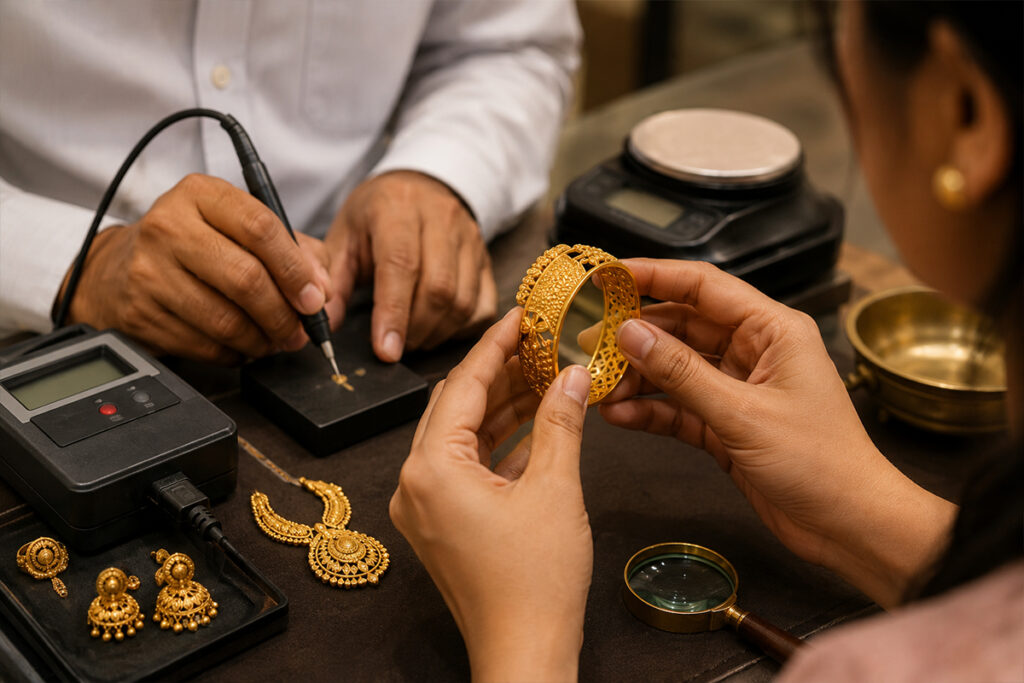
- Karat meters – Non-invasive electronic devices that scan the metal and instantly display purity, without damaging the jewellery
- Acid testing – A small scratch is tested with acid to check how it reacts, though this is less common now due to non-invasive alternatives
- XRF (X-Ray Fluorescence) machines – Highly accurate spectrometers used by professional buyers for precise purity readings
A trustworthy buyer will always test your jewellery in front of you and explain the reading, rather than quoting a price without showing you the process.
What If Your Gold Isn’t Hallmarked?
Older jewellery, especially inherited pieces, often doesn’t carry a BIS hallmark since hallmarking became widespread only in recent years. This doesn’t mean the gold has no value — it simply means the buyer will need to test the purity using a karat meter or XRF machine before quoting a price. Always ask to see this test happen rather than accepting a verbal estimate.
Why This Matters When You Sell
Knowing your gold’s purity before you sell helps you:
- Understand roughly what price range to expect
- Spot the difference between a fair offer and an underpriced one
- Ask informed questions during the testing process
- Avoid being rushed into a quick, unclear transaction
How Express Money Gold Handles Purity Testing
At Express Money Gold, every purity check is done transparently and in front of you using accurate testing equipment, whether your jewellery is hallmarked or not. We explain the purity reading clearly before quoting a price, so you always know exactly what you’re being paid for. Whether it’s a hallmarked chain, an old family ring, or broken jewellery with no markings at all, our process stays the same — honest testing, clear communication, and instant cash once you agree to the price.
Conclusion
Purity is the foundation of a fair gold sale. Knowing how to read karat marks, understand BIS hallmarks, and recognize proper testing methods helps you walk into any sale with confidence. If you’re in Coimbatore and ready to sell, Express Money Gold offers transparent purity testing and instant cash — with no guesswork involved.